What is filling and does my bow need it?
Understanding Filling on the Stick of a Bow
Over time, even the most carefully maintained bow will experience some wear and tear. One of the most common forms of this wear is the loss of wood in particular areas of the stick. This type of wear requires filling, a necessary process that helps restore the shape and integrity of the bow. But what exactly does "filling" mean, and why is it so important? Let’s break it down.
What is 'Filling'?
Filling on a bow is the process of restoring the wood of the stick where it has worn away, typically from the repeated pressure and friction of the player's thumb and hand. This wear is most commonly seen in the area between the thumb leather and the frog. However, it can also occur around the handle and lapping of the bow.
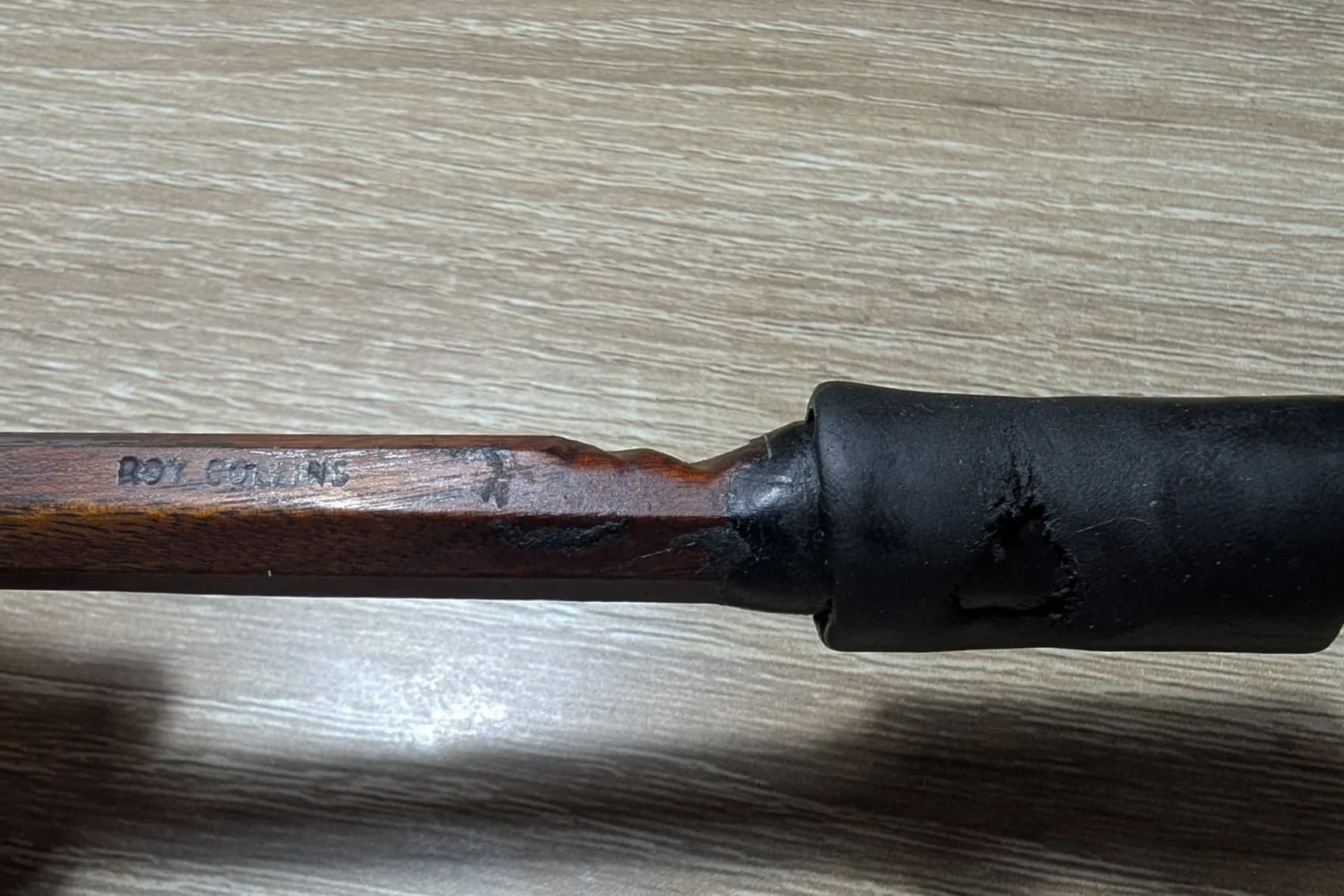
A cello bow before restoration
It's essential to understand that this type of wear isn’t caused by any mistakes or improper handling from the player. Rather, it’s simply the result of normal use over time. While a small amount of wear may not seem alarming, leaving it untreated can lead to more significant problems.
Common Areas of Wear
The area between the thumb leather and frog is the area in which wear typically happens. Many players have a habit of placing their thumb against the ridge of the thumb leather (where the thumb leather meets the stick), rather than on top of the thumb leather. This ridge gives the thumb more purchase while playing, however, as players sweat and repeatedly use the bow, this friction slowly wears away the wood, causing a divot or a slight misshaping in the stick. Even with players who do place their thumb on top of the thumb leather, wear will eventually cause the thumb leather to break down, eventually leading to the wood to be revealed underneath, leading to the same issue as previously mentioned.
While minor wear in this area isn’t an immediate concern, if left untreated, the wear will only get worst and can become problematic.
Why Filling is Necessary
There are two primary reasons why filling is essential for maintaining the health and functionality of the bow:
1. Unstable Frog
If wear occurs in the area between the thumb leather and the frog, it can lead to an unstable frog. The frog is designed to sit flush against the underside of the bow. However, if the area around the frog becomes worn, the frog can no longer sit flush on the stick. When you get a rehair the hair will most likely be shorter than when you left it with your restorer. Shortening the hair will cause the frog to now sit atop the worn area with out the support of the wood that is missing from this segment of the stick, the pressure from your thumb will be applied to the frog which is now resting on an unstable surface.
This can cause the frog to receive too much force in an uneven way, leading to cracks, particularly in the area known as the thumb seat. These cracks can severely compromise the structural integrity of your frog and if left untreated can, in worst case scenarios, render the frog unusable.
2. Compromise The Structural Integrity Of The Stick
In extreme cases, excessive wear can lead to structural weakness in the bow. If the wood wears down too much—creating deep divots of 3 to 4mm or more—the bow can lose its overall strength. While this is a more severe issue, it's something that can be prevented with regular maintenance, such as filling.
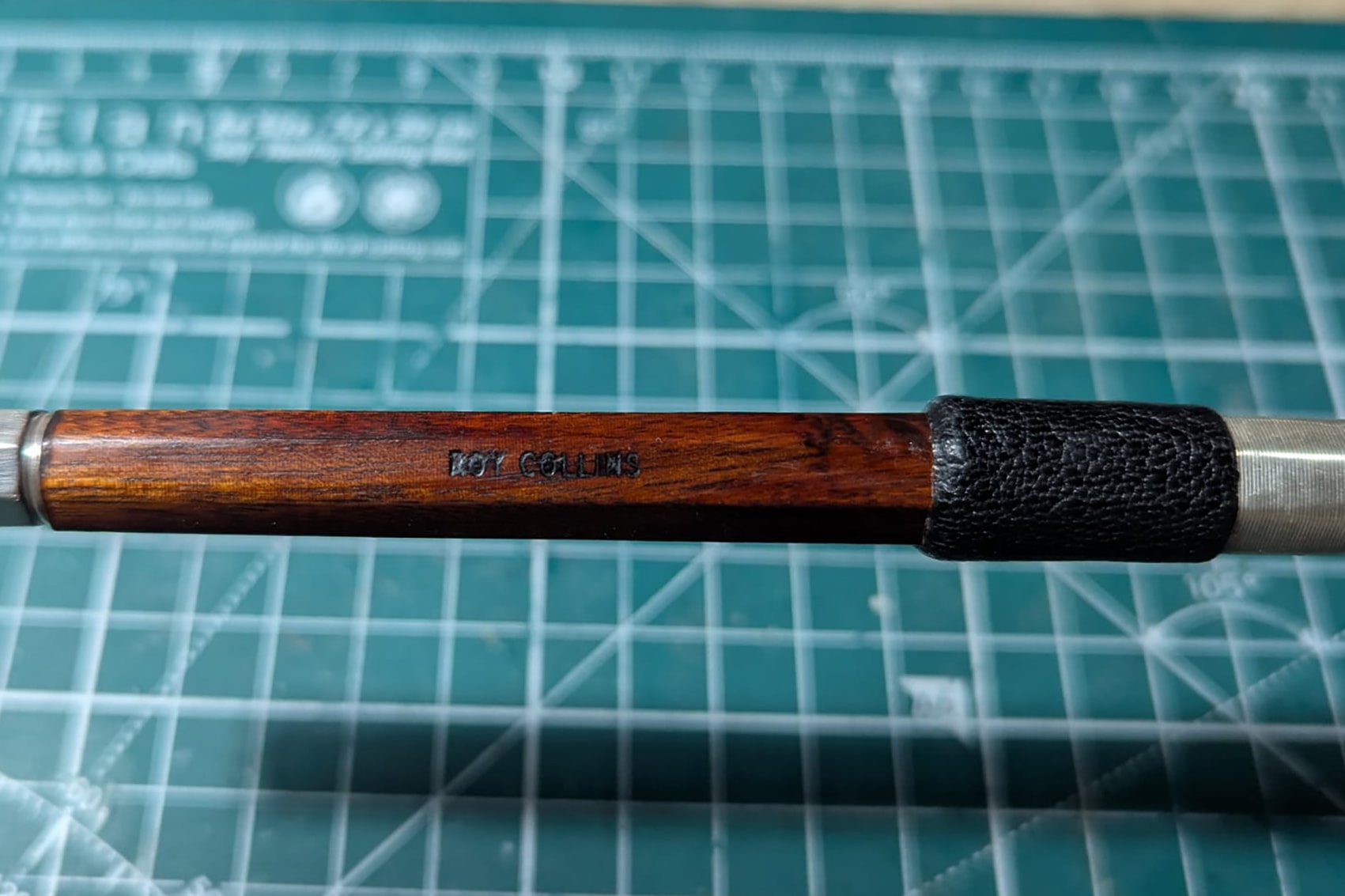
The same cello bow after restoration
The Solution: Filling the Stick
Fortunately, the solution to these issues is simple: filling the stick. Filling is typically done when having the thumb leather replaced, and the process involves building up the worn area and reshaping it to match the bow’s original form.
How Much Does It Cost?
The cost of filling depends on the extent of the wear. In most cases, filling is relatively inexpensive, typically no more than the cost of a rehair but often less. For more extensive wear, such as severe divots, the cost will be higher, but it should still remain a reasonable charge. If the wear is located on the handle (the area above the frog), a leather cover can be added to provide additional protection. For wear in the lapping area, the lapping can be removed, the stick filled, and then the bow can be relapped.
Extreme Cases: Adding New Wood
In rare instances, especially with severe wear, new pieces of wood may need to be added to the bow to restore its integrity. However, this is uncommon and usually only necessary in extreme cases of wear.
Frequently Asked Questions
Two of the most common questions asked by bow owners are,
1. "What will the filled area look like?"
Filling, when done correctly by a skilled restorer, should be nearly invisible. The area should look like a seamless continuation of the original stick/wood.
2. “Will My Violin Bow Feel the Same After Filling?”
It depends.
When you play your violin, your thumb and fingers gradually mold the bow stick to fit your hand, creating a personalized "groove" that feels comfortable and familiar over time. This can make the bow feel very natural to hold, especially in the area where your thumb rests. However, this wear also changes the original shape of the bow stick.
Filling the stick aims to restore the bow to its original shape—the shape the bow maker intended. This means that, after the filling process, your bow may feel slightly different, especially under the tip of your thumb. While the weight and balance of the bow won’t change, the precise feel of the stick will shift back to how it was when the bow was new.
For most players, this change is a positive one, bringing the bow back to its original comfort and function, as it was designed. If you’ve had the bow for many years and never had it filled before, you may notice a more of a difference. But rest assured, this change is necessary for maintaining the long-term integrity and performance of your bow.
If filling has been recommended for your bow, then we’d strongly advise having it done. It’s an important step in keeping the bow top condition, even if the initial feel is slightly different after the process. Over time, you’ll likely find that the bow feels just as good, if not better, once the stick has been restored to its intended shape.
Conclusion: The Importance of Filling
Filling is an essential part of maintaining your violin bow, and it’s one of the most important steps in preventing further damage. By filling worn areas, you ensure that your bow and it’s parts remain functional, stable, and structurally sound, ultimately prolonging its life.
At Briggs Bows, we are dedicated to keeping your bow in top condition for years of continued use. If you notice any wear on the stick, don’t hesitate to reach out. We can assess the situation and recommend the best course of action to keep your bow in perfect playing condition.
Remember, regular maintenance and filling will help keep your bow performing at its best, and it will prevent more costly repairs down the line.